Quick Overview
- Feed safety and raw material control: Verify that animal raw materials come from audited suppliers and officially vet-inspected animals approved for the human food chain, and that production follows the HACCP model with an established, risk-based monitoring plan.
- Nutritional status and labeling (FEDIAF): Ensure the manufacturer draws a clear distinction between complete pet foods formulated to meet FEDIAF nutritional guidelines and complementary feeds.
- Frozen logistics and temperature control: Check that freezing takes place rapidly directly on the processing line and that shipments are carried out within a temperature-controlled cold chain governed by defined requirements and documented monitoring.
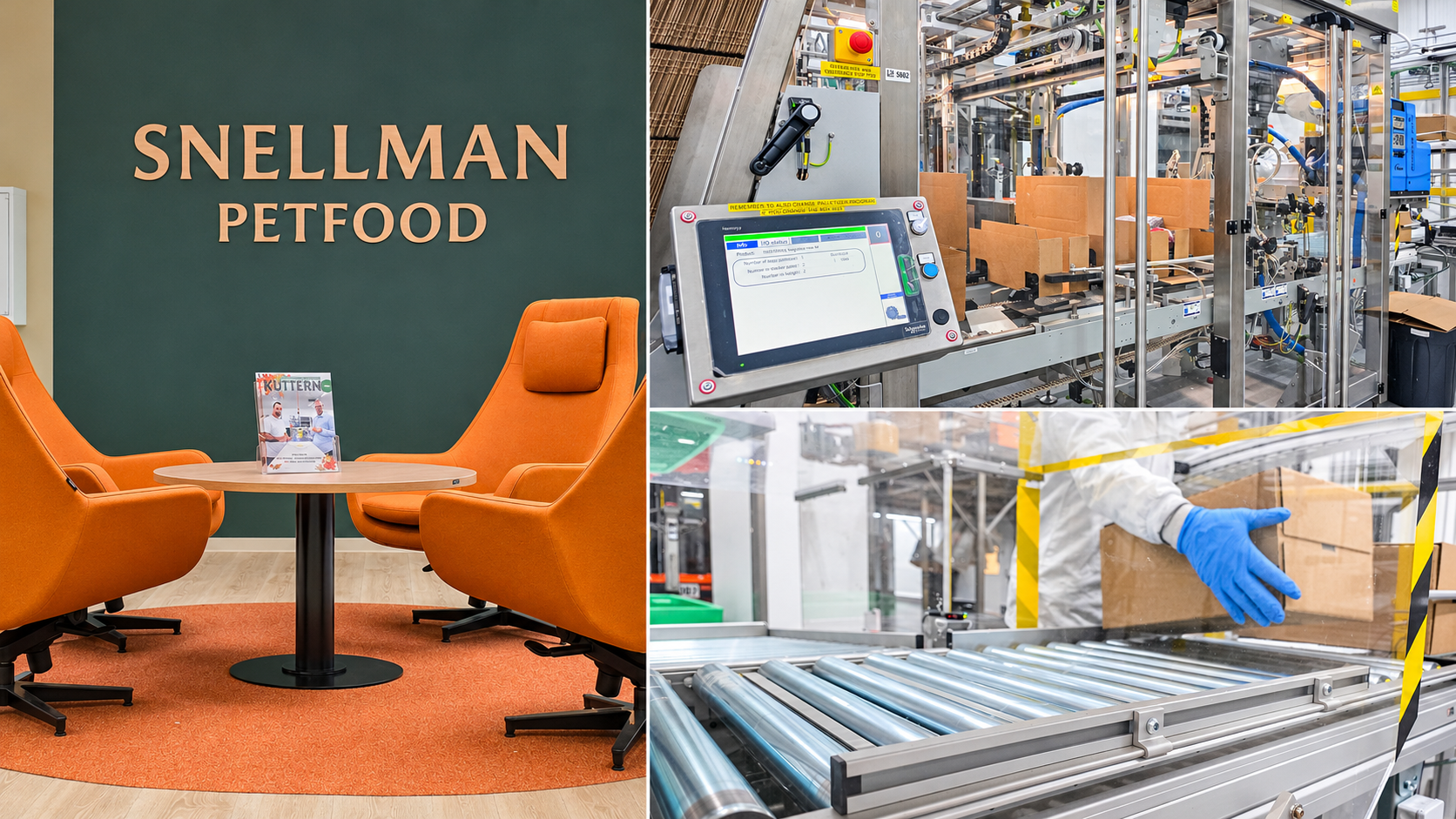
- Scalable capacity close to market: Confirm dedicated production capacity without bottlenecks—such as Snellman Petfood’s specialized facilities in Finland, Sweden, and the United Kingdom. In Finland, Snellman Petfood has invested in a new, specialized production facility in Pedersöre, built for scalable production of frozen raw pet food.
What Are the Risks When Sourcing Frozen Raw Pet Food – and How Do You Reduce Them?
Launching or expanding an assortment with frozen raw pet food creates major opportunities for both retail and distributors, as more pet owners look for minimally processed meals with transparent ingredients. At the same time, raw, deep-frozen products place entirely different demands on supplier due diligence than traditional dry kibble.
For buyers and quality assurance (QA) teams, evaluating a manufacturing partner fundamentally comes down to preventing four distinct areas of risk:
- Microbiological risks: Because frozen raw pet food is not heat-treated, gaps in raw material control or factory hygiene can lead to bacteria such as Salmonella and Enterobacteriaceae—resulting in recalls and damaged trust.
- Unclear nutritional and labeling status: When importing or listing with major retail chains, issues arise if the nutritional status of recipes is unclear, or if packaging labels do not comply with the destination country’s legal requirements and guidelines.
- Temperature deviations in the cold chain: Insufficient freezing or breaks during cross-border transport and transshipment compromise both food safety and product quality.
- Capacity ceilings during growth: Smaller, regional producers often struggle to scale up volumes when sales accelerate or during promotional campaigns.
At Snellman Petfood—an independent operating company within the family-owned Snellman Group with over 20 years of raw feeding expertise—we address these challenges through documented raw material traceability, strict hygiene procedures in production, and dedicated, specialized facilities in Finland, Sweden, and the United Kingdom. Below, we walk through the specific questions you should ask a prospective manufacturing partner—and the answers you should expect.
Feed Safety and Traceability: Questions About Raw Materials, Hygiene, and Laboratory Controls
Because frozen raw pet food is not heat-treated, the supplier’s raw material control and factory hygiene form the most critical starting point of any audit. Ask the manufacturer the following questions:
- What is the origin and inspection status of the animal raw materials?
- What to look for: Raw materials must come from audited suppliers and animals that have undergone official veterinary inspection at slaughter and are approved for the human food chain. Avoid suppliers that rely on vague marketing terms such as “human-grade” without clear documentation.
- How Snellman Petfood operates: All of our animal raw materials come exclusively from selected, audited suppliers and officially vet-inspected animals approved for the human food chain.
- How are the quality management system and hygiene zones structured inside the facility?
- What to look for: Manufacturing should follow preventive procedures based on the HACCP model, featuring segregated hygiene zones, continuous process chilling, and defined critical control points (CCPs).
- How Snellman Petfood operates: Our production lines are governed by preventive quality management systems designed around the HACCP model, with clearly segregated hygiene zones, established sanitation programs, and documented control points.
- How is microbiological sampling carried out?
- What to look for: The manufacturer should be able to present a structured, risk-based sampling plan in which sampling and accredited laboratory analyses focus on the most critical raw materials, products, and process steps. Combined with preventive hygiene procedures, this provides reliable quality monitoring over time.
- How Snellman Petfood operates: Microbiological sampling and laboratory analyses are conducted systematically according to our established, risk-based monitoring plan to monitor and minimize the presence of bacteria such as Salmonella and Enterobacteriaceae.
- How quickly can you trace a finished pack backward and forward?
- What to look for: Full traceability at supplier, raw material, recipe, and batch level so that any deviations can be isolated immediately.
- How Snellman Petfood operates: Every raw material lot is logged upon intake and linked to the corresponding recipe and production batch within our own facilities, ensuring full backward and forward traceability.
Nutritional Profile and Regulatory Compliance: Questions About FEDIAF Nutritional Guidelines and Export Documentation
When products are destined for major retail chains or export to new countries, nutritional status and documentation must be completely transparent:
- How do you distinguish between complete diets and complementary feeds?
- What to look for: Packaging and product data must clearly state which recipes are formulated to meet an animal’s daily nutritional needs in line with FEDIAF nutritional guidelines, and which are pure raw components or traditional raw feeding models (such as the 80/10/10 ratio).
- How Snellman Petfood operates: Our complete diets are formulated to meet FEDIAF nutritional guidelines when fed according to the recommended feeding amount, while pure raw components (monoprotein) and 80/10/10 recipes are clearly declared and labeled as complementary feeds.
- What recipe specifications and export documents do you prepare ahead of launch?
- What to look for: The manufacturer should be able to supply verified nutritional declarations, raw material certificates, veterinary accompanying documents, and statutory labeling adapted to the destination country’s regulations.
- How Snellman Petfood operates: Ahead of launch or export, we compile complete recipe specifications, verified nutritional declarations, and the required veterinary export documentation tailored to the rules of, for example, the Nordic region, wider EU markets, or the United Kingdom
Frozen Logistics and Scalability: Questions About the Cold Chain, Packaging, and Capacity
Even the best-formulated recipe loses quality if freezing takes too long or transport fails. At the same time, major retail chains need assurance that a supplier can handle growing volumes over time. Ask the following questions:
- How and when are products frozen after production?
- What to look for: Freezing should take place rapidly immediately after portioning and packing to preserve raw material quality and limit microbial growth.
- How Snellman Petfood operates: Products are quick-frozen directly on the processing line. Snellman Petfood has invested in a new, specialized production facility in Pedersöre, built for scalable production of frozen raw pet food, ensuring high freezing capacity even for large order volumes.
- How is temperature controlled and documented during storage and transport?
- What to look for: The supplier should work with audited transport providers within a temperature-controlled cold chain governed by defined temperature requirements and documented monitoring all the way to your central warehouse.
- How Snellman Petfood operates: All shipments are handled by selected, audited logistics partners within a temperature-controlled cold chain, where temperatures are monitored and documented according to established procedures during both storage and transit.
- What packaging formats are offered, and what does production capacity look like over the long term?
- What to look for: Freezer-friendly, stackable packaging simplifies handling on pallets and in retail store freezers. Dedicated production capacity across multiple locations provides a broad and scalable industrial manufacturing platform.
- How Snellman Petfood operates: We supply individually frozen portions (nuggets/medallions) and blocks in sturdy outer cases from three specialized facilities: Finland (large-scale frozen raw pet food), Sweden (regional frozen raw pet food as well as gentle freeze-drying and treats), and the United Kingdom via Benyfit Natural.
Summary Risk Checklist for Buyers and Quality Assurance (QA)
The table below summarizes the key risk areas when sourcing frozen raw pet food, the questions you should ask, and how Snellman Petfood manages each area in practice:
| Risk Area | Key Question for the Manufacturer | How the Risk Is Reduced in Practice | Snellman Petfood Operational Approach |
|---|---|---|---|
| Raw Materials & Traceability | What is the origin of the meat, and how do you trace individual lots? | Requirement for official veterinary inspection and full backward and forward batch traceability. | Animal raw materials from audited suppliers and officially vet-inspected animals approved for the human food chain, with full batch traceability. |
| Microbiological Safety | How is hygiene managed, and what does your sampling plan look like? | Preventive procedures based on the HACCP model combined with risk-based sampling. | Segregated hygiene zones, HACCP-based control points, and microbiological sampling carried out according to an established, risk-based monitoring plan. |
| Nutrition & Labeling (FEDIAF) | How do you ensure the correct nutritional status and labeling for our market? | Clear separation between complete diets and complementary feeds, backed by verified specifications. | Complete pet foods formulated to meet FEDIAF nutritional guidelines, alongside clearly labeled complementary feeds and export documentation. |
| Frozen Logistics & Cold Chain | How are products frozen, and how is temperature monitored during transit? | Rapid inline freezing and audited logistics partners with defined temperature requirements. | Rapid freezing directly on the processing line and transport within a temperature-controlled cold chain with documented temperature monitoring. |
| Capacity & Delivery Reliability | Can you handle increased volumes during promotions and store rollouts? | A broad and scalable industrial manufacturing platform. | Specialized facilities in Finland (new production facility in Pedersöre for scalable production of frozen raw pet food), Sweden, and the United Kingdom with freezer-friendly packaging formats. |
Frequently Asked Questions About Risk Management and Evaluating Frozen Raw Pet Food Manufacturers
When auditing a manufacturing partner, buyers and quality assurance (QA) teams should verify four foundational pillars:
- Feed safety and raw materials: Animal raw materials come from audited suppliers and officially vet-inspected animals approved for the human food chain, and production is governed by preventive procedures based on the HACCP model alongside an established, risk-based microbiological monitoring plan.
- Nutritional profile in line with FEDIAF: Complete pet foods are formulated to meet FEDIAF nutritional guidelines, while pure raw components and 80/10/10 recipes are clearly labeled as complementary feeds.
- Frozen logistics: Products are quick-frozen directly on the processing line and transported within a temperature-controlled cold chain governed by defined requirements and documented monitoring.
- Scalable capacity: The supplier operates dedicated industrial capacity—such as Snellman Petfood’s specialized facilities in Finland, Sweden, and the United Kingdom—so deliveries keep pace as sales grow. In Finland, Snellman Petfood has invested in a new, specialized production facility in Pedersöre, built for scalable production of frozen raw pet food.
The four most common risks are microbiological risks (because the products are not heat-treated), unclear nutritional and labeling status across different markets, temperature fluctuations during frozen transport, and supply bottlenecks when demand increases. These risks are reduced by selecting a manufacturer with strict hygiene procedures and clearly segregated hygiene zones, documented traceability at batch and supplier level, verified nutritional declarations, rapid freezing directly on the processing line, and a broad and scalable industrial manufacturing platform.
In professional food and feed manufacturing, modern microbiological safety relies on preventive work based on the HACCP model (raw material control, hygiene zones, and temperature control) combined with a structured, risk-based sampling plan. An established, risk-based monitoring plan focuses sampling and accredited laboratory analyses on the most critical raw materials, products, and process steps, providing far more reliable and scientifically grounded quality oversight over time.
Ahead of retail listing or private label production, the manufacturer should be able to provide complete recipe specifications, verified nutritional declarations (for complete pet foods formulated to meet FEDIAF nutritional guidelines), an overview of HACCP-based own-checks and the microbiological monitoring plan, batch-level traceability procedures, and the required veterinary accompanying documents and labeling data tailored to the target market.
Would You Like to Review Our Quality Assurance or Ask Your Own QA Questions?
We are happy to share how we manage raw material control, traceability, recipe formulation, and frozen logistics across our facilities in Finland, Sweden, and the United Kingdom. Whether you are evaluating a partnership around our own brands or planning a private label project, our B2B and quality teams are ready to assist you.
Please include the following details in your inquiry so we can respond promptly with relevant documentation:
- Target Market and Distribution Channels: Intended countries and sales channels (grocery retail, specialist pet retail, or e-commerce).
- Desired Product Format: Frozen raw pet food (complete diets or pure raw components), freeze-dried food, or treats.
- Estimated Annual Volume and Delivery Frequency: Projected annual volumes and preferred delivery cadence.
- Packaging Format and Unit Size: Preferred pack type (for example, individually frozen portions/nuggets/medallions in a bag or blocks) and weight per unit.
- Planned Timeline: Target dates for QA audit, trial delivery, or market launch.
- Recipe and Brand Requirements: Interest in our existing brands (MUSH, Fodax, Raw for Paw, Benyfit Natural) or a private label concept, as well as recipes formulated to meet FEDIAF nutritional guidelines.